
The regulatory abyss
The main reason for the ban on smart luggage with non-removable batteries was the
significant fire hazard posed by lithium-ion batteries.
These batteries can undergo a process known as thermal runaway, a self-reinforcing process that can lead to a fire that is difficult to extinguish with the means available in the cargo hold

The Reshaping of the Smart Luggage Market
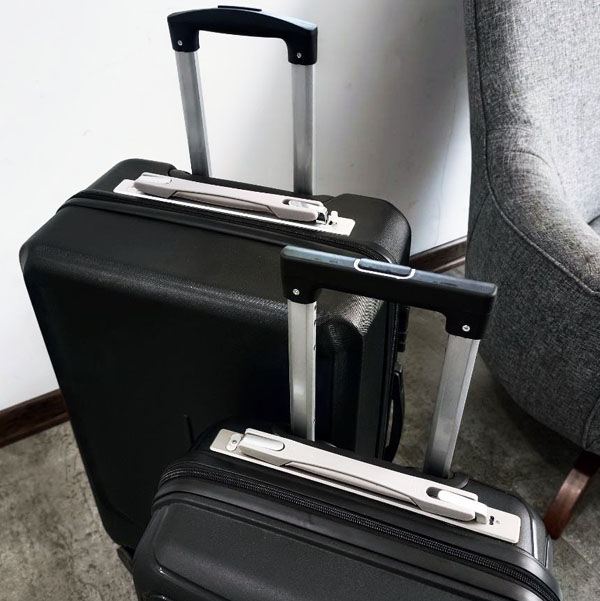
The rise and fall of Bluesmart Inc.
The rise and fall of Bluesmart Inc. serve as a paradigmatic case study for the inherent risks faced by start-ups in highly regulated industries. Originally hailed as a pioneer and a disruptive innovator that created a new category of travel products with an unprecedentedly successful crowdfunding campaign, the company’s journey ended in an abrupt and complete failure. The central reason for its demise was not a lack of demand or innovation, but a critical design decision: the fixed, non-removable integration of a lithium-ion battery.
This element, which was the core of the product’s smart features, became incompatible with the evolving safety regulations of aviation authorities. The analysis of this case reveals a series of critical insights that extend beyond the individual fate of Bluesmart and have shaped the entire industry.
Financially, the company raised impressive funds, with total financing reported to be between $23.8 million and $27 million across various reports. This success in capital raising, which attracted a wide range of institutional investors, also created a strategic and manufacturing inertia that made it impossible for the company to react quickly to external shocks.
The turning point came with the enforcement of stricter regulations by the US Federal Aviation Administration (FAA), which banned the transport of luggage with non-removable batteries in the cargo hold of aircraft. This ban rendered Bluesmart’s core product obsolete virtually overnight.
While Bluesmart and similar competitors did not survive, The ongoing relevance of battery safety is underscored by more recent incidents, such as the fire on a power bank aboard an Air Busan flight in 2025, which confirmed the continuous need for strict safety regulations for all forms of lithium batteries in aviation. The Bluesmart case is therefore not just a retrospective on a failed innovation, but a forward-looking insight into the dynamic and often merciless intersection of technology, regulation, and entrepreneurship.
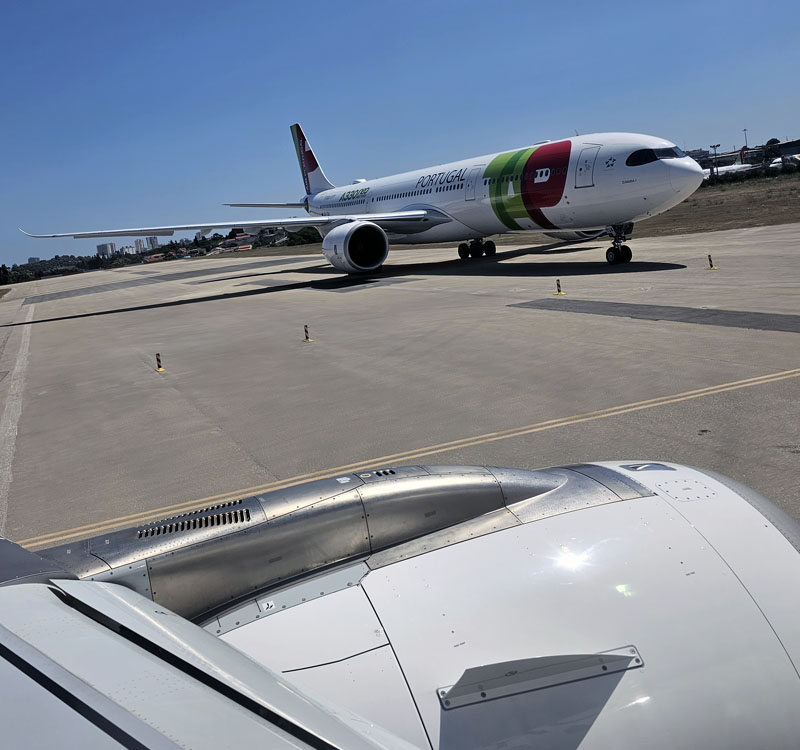
The Regulatory Abyss: The FAA Ban
The Rationale for the Ban
The main reason for the ban on smart luggage with non-removable batteries was the significant fire hazard posed by lithium-ion batteries. These batteries can undergo a process known as thermal runaway, a self-reinforcing process that can lead to a fire that is difficult to extinguish with the means available in the cargo hold.
Concern about this danger increased following high-profile incidents, such as the worldwide recalls of the Samsung Galaxy Note 7, which brought the risks and the difficulty of containing fires caused by lithium-ion batteries into the public focus.
The ban was not a sudden, arbitrary decision, but a consistent measure in response to well-documented and increasing safety threats.
The Exact Regulatory Wording
The regulatory basis for the ban is anchored in the regulations of the US Department of Transportation (DOT) and the FAA. The core of the regulation for smart luggage is enshrined in the FAA regulation 49 CFR 175.10(a)(26). The associated FAA „PackSafe“ guideline expressly states: „Baggage equipped with lithium batteries (e.g., smart bags) intended to power features such as location tracking, digital weighing, or motors must be carried as carry-on baggage unless the batteries are removed from the baggage.“
For checked baggage, these items are only allowed on the condition that the built-in lithium-ion batteries do not exceed a Watt-hour rating of 2.7 Wh, which is far below the Bluesmart One’s 10,000-mAh battery, which corresponds to about 37 Wh.2
The wording of the regulation directly addressed the core problem: smart luggage could not be flown in the cargo hold.
The devastating effects on Bluesmart arose from the addition „unless the batteries are removed from the baggage.“ Since the Bluesmart One’s battery was permanently installed and could not be removed by the user, the suitcase could not comply with the regulations. This made the product in its original form practically unusable for its primary use case, air travel.
A Reshaped Market
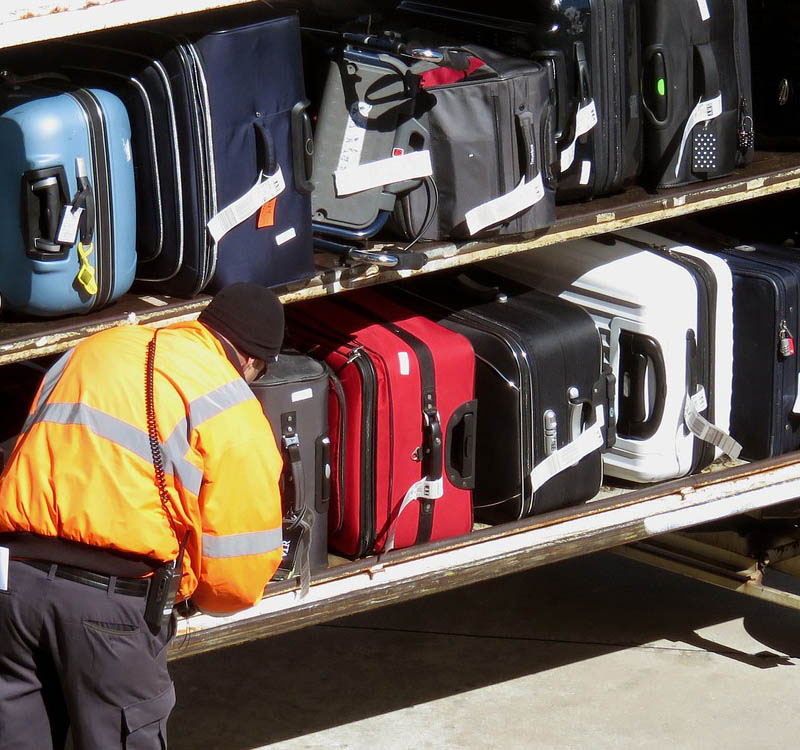
Thanks to new, completely battery-free technologies, safe and practical suitcases are finally possible. Even though most airlines‘ check-in policies are completely different today than they were five years ago, they now view baggage as a vital source of revenue.
We help travelers be informed and better prepared. Not so much for first and business class travelers, but for the broader economy class travelers.
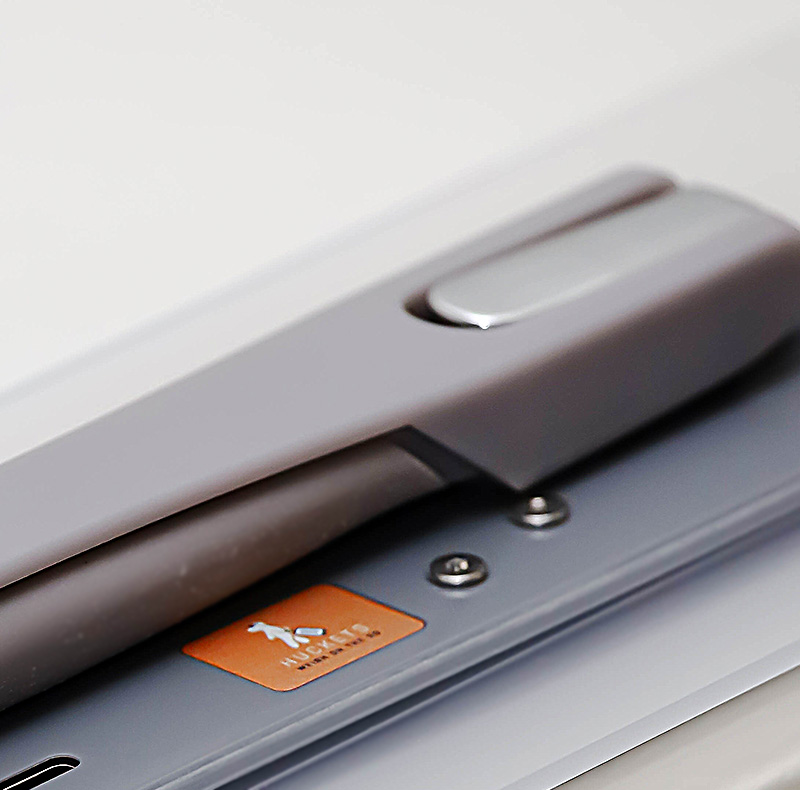
Technological innovations for even more travel comfort
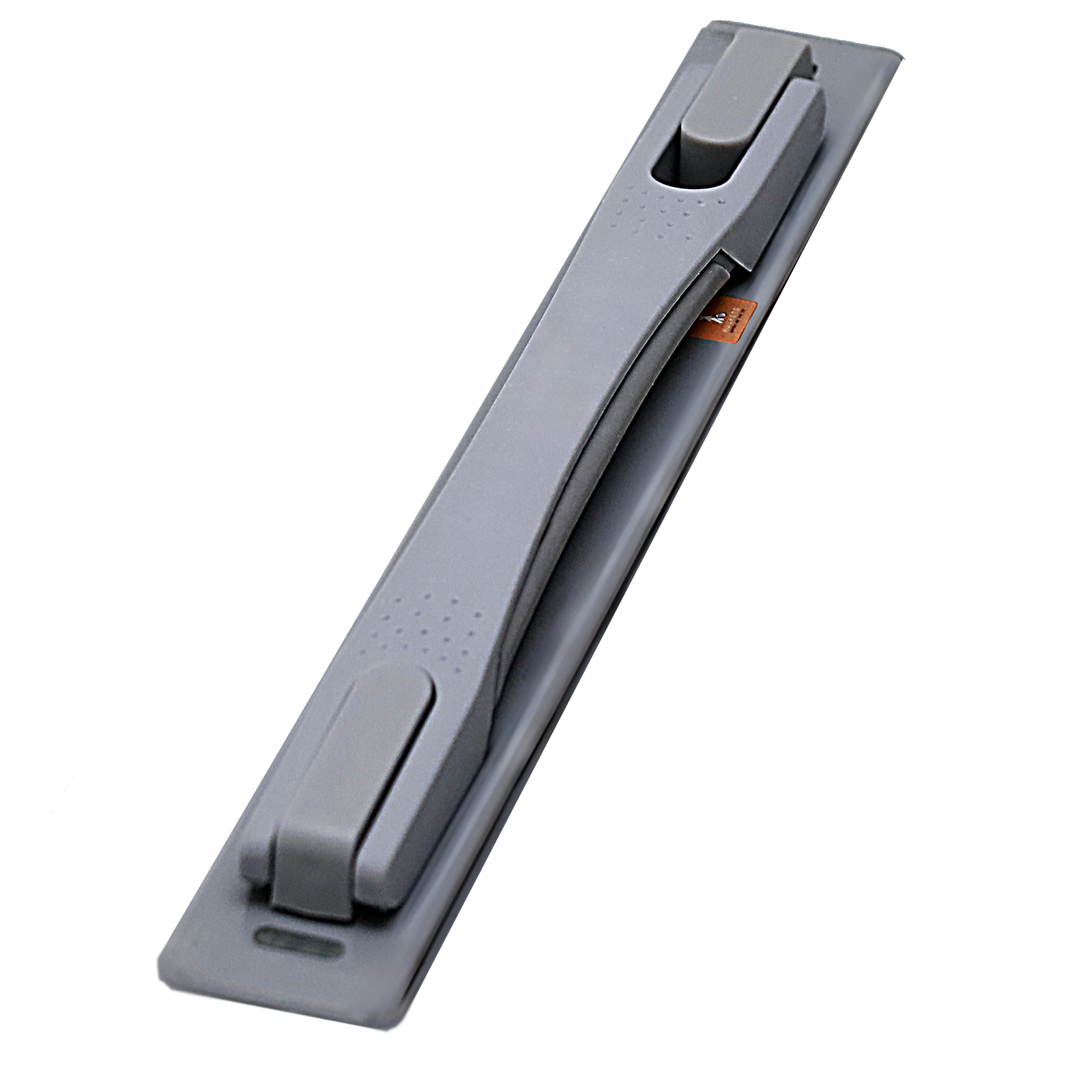
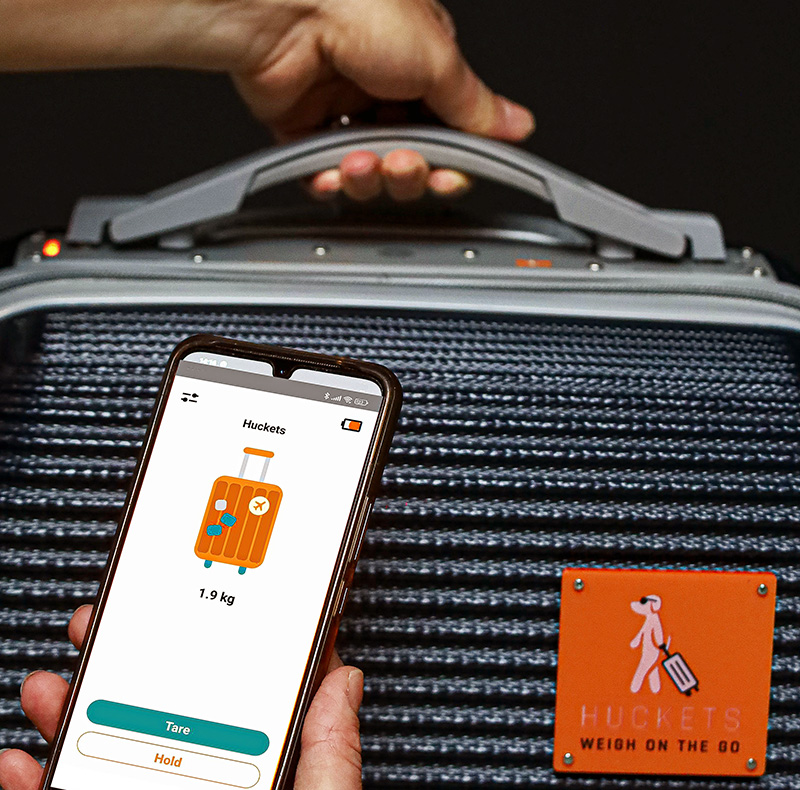
Innovation is a top priority at Huckets. With our integrated luggage scale, which works completely without batteries, and other solutions, we are setting new standards in terms of travel comfort.
These well-thought-out functions enable our OEM customers to differentiate themselves decisively from the products of the competition.
A luggage manufacturer can use our design models or develop a custom design model from us and purchase it as a part.
Offer your customers the ultimate travel convenience.
No more surprises at the airport, even if your customers have bought many souvenirs on the way.
With our integrated suitcase scale you can provide the ammenity to weight a suitcase anytime and anywhere.
Since the scale is integrated, air-passengers can no longer forget it at home.
Why weight watching on luggage is so important?
The business model of low-cost airlines
That’s why they are so cheap at first glance
The low-cost airlines save a lot of personnel costs in some cases because they only offer check-in online or only offer check-in at the airport at a huge additional cost.
Hand luggage is and remains an important factor. According to a ruling by the European Court of Justice (ECJ) in September 2014, hand luggage must „always remain free“.
The only problem is: There are no regulations about how big and how heavy a piece of hand luggage can be.
The maximum sizes and guidelines are set by the airlines themselves. This also means that the airlines can set their own surcharges if the dimensions and maximum weight of the hand luggage are exceeded

Be careful with hand luggage in particular
Cost traps due to a lack of standards
For example, an Irish low-cost provider only allows you to take a small piece of hand luggage the size of a laptop bag free of charge.
Depending on the route, larger pieces of hand luggage cost between six and thirty-six euros when booking online. At the counter on site, however, it is even more expensive: it costs 20 to 38 euros per piece of hand luggage.
And it gets really expensive when boarding, when it is actually already too late – you will be charged up to 46 euros. With flight ticket prices sometimes only 10 to 15 euros, that’s quite a sum in percentage terms.
Other budget airlines are more accommodating: a small piece of hand luggage is sometimes free. Larger pieces of luggage, such as a rolling trolley, cost at least 7.99 euros.
It is important to note, however, that airlines often change their dimensions and weight guidelines for hand luggage. This is of course systematic, as uncertainty increases the possibility of the passenger falling into a cost trap.
That’s why it’s important to always find out about the permitted dimensions before departure and to measure and weigh the pieces of luggage precisely when packing.
At least there is already a „motion for a resolution on standard dimensions for hand luggage„. The EU Parliament’s resolution on uniform prices and size requirements for hand luggage on airplanes was successful. The EU Commission is therefore called upon to present measures for implementation.
Reliability – don’t pay for excess baggage
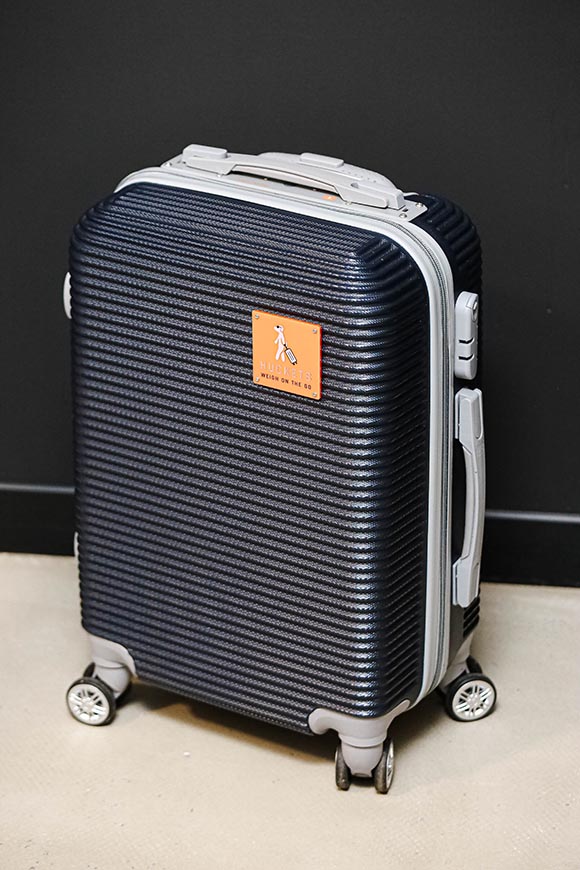
Huckets is more than just a manufacturer of useful parts for luggage manufacturers. The luggage parts, such as the handle scales for suitcases, bags or backpacks, are always reliable companions that make a trip as pleasant and practical as possible.
The combination of innovative ideas, modern design language and technical precision gives you products that are not only visually appealing, but also leave nothing to be desired in terms of functionality.
My Contact Information
(+49) 163 197 88 88
Vitality Services LLC- Huckets
801 Pennsylvania Ave. NW,
Unit 1112
Washington DC 20004 USA
Legal Info
- Privacy
- Cookie Policy
- Credits