+49 163 197 8888 juergenw@huckets.com

Checkin over a period of time

Ancillary revenue is mission-critical: for many airlines, it accounts for 20–40% of profit margin.

Baggage fees are among the top two ancillary revenue sources (alongside seat selection/upgrades).

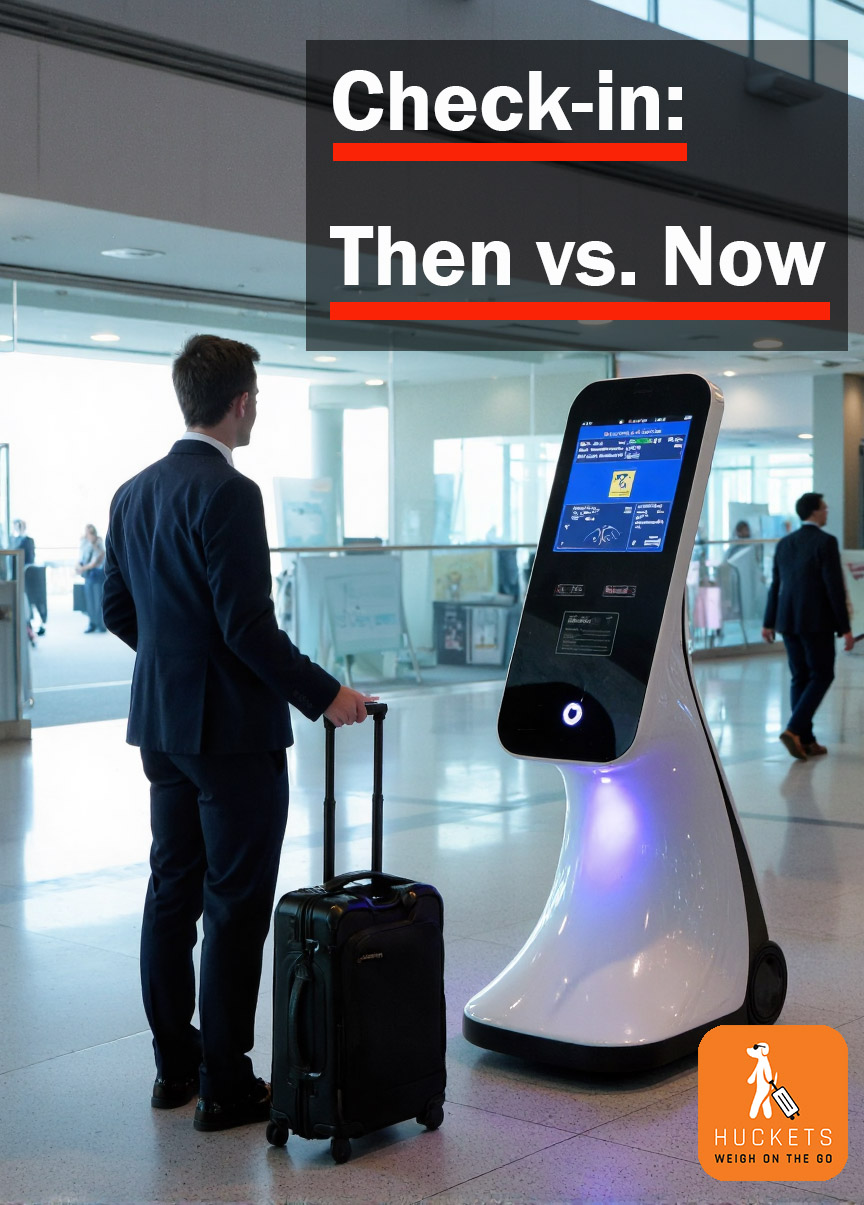
Check-in now in 2025

Digital-first processes:

  • Many airlines push mobile/app check-in with bag tag kiosks and biometric bag drops.
  • Staff interaction is minimal except for problem cases.


Dynamic baggage pricing:

  • Prices vary by flight load, route, or even when/where you buy (similar to seat pricing).
  • Some airlines let you pre-purchase extra weight in 1–5 kg increments online, often cheaper than at the airport.


Self-weighing:

  • Some airports offer scales near check-in to let passengers re-pack before drop-off.


Weight enforcement is near universal:

  • AI-enabled conveyor systems automatically divert overweight bags.


Sustainability push:

  • airlines highlight weight control as part of reducing CO₂ emissions (lighter planes = less fuel burn).

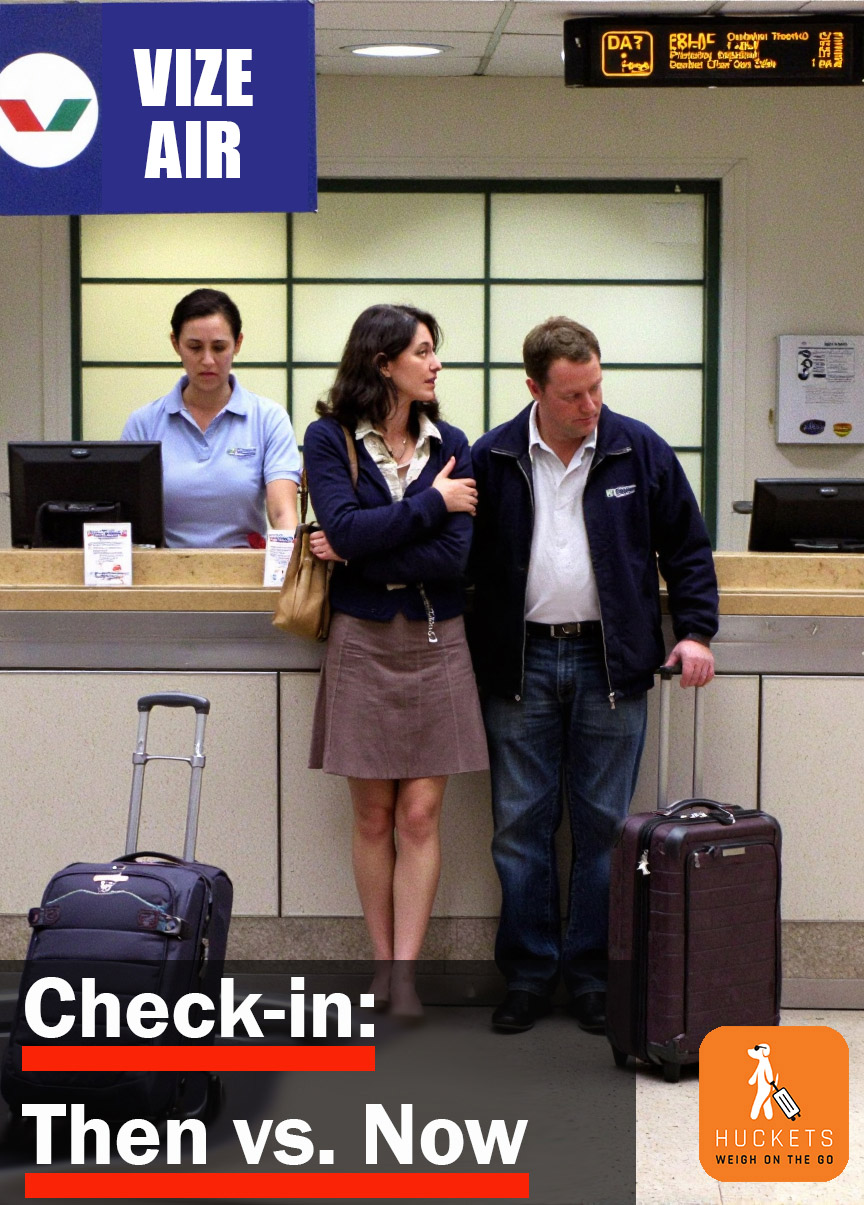
5 years ago (~2019–2020, pre-pandemic)

Self-service bag drops

  • had become widespread at major airports. Passengers print luggage tags themselves and drop bags without staff intervention.


Strict weight enforcement:

  • even 1 kg over could trigger a hefty fee. Staff had less discretion.


Ancillary revenue models matured:

  • Most legacy airlines had unbundled tickets (basic economy fares without checked luggage).
  • LCC baggage fees had become sophisticated (differentiated by route, season, time of booking).


Automation:

  • More airports had „self-tagging“ and automatic conveyors that reject overweight bags.


Cabin baggage rules

  • became stricter, with measurements at gates, further monetizing hand luggage.

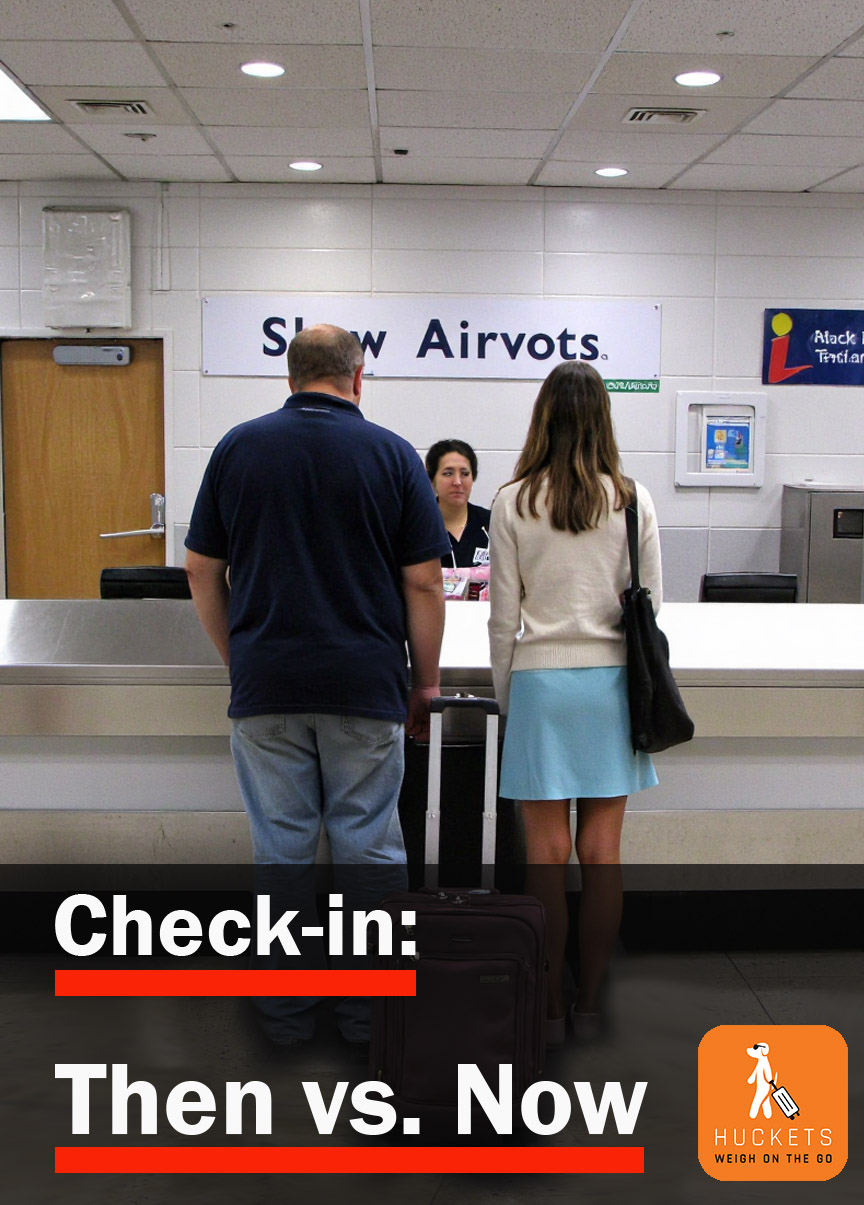
Check-in 8–10 years ago (~2015–2017)

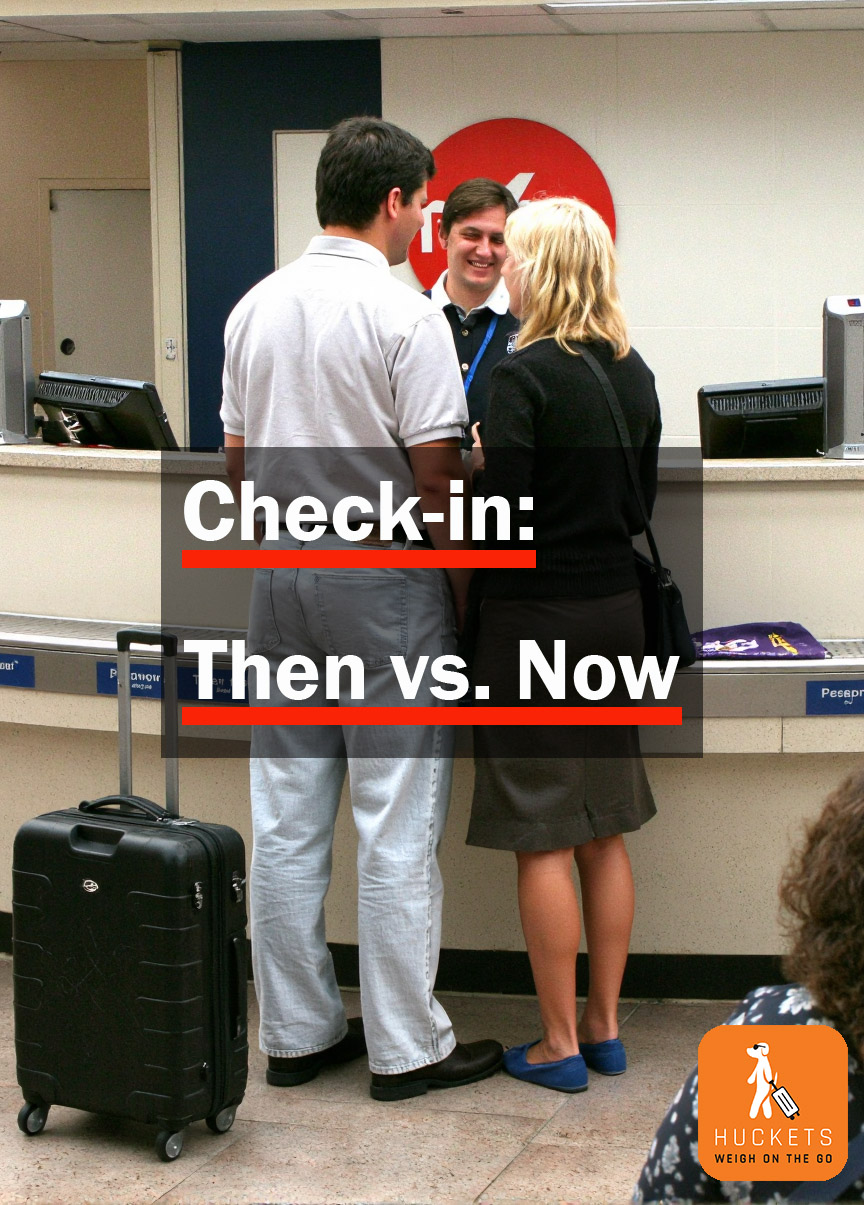
Check-in at counters

  • was still dominant. Self-service kiosks existed, but mostly for boarding passes. Bag drop was mostly staffed.


Free baggage allowances

  • were more common, even in economy. Many airlines (especially legacy carriers) still included at least one checked bag in the ticket price.


Weighing of luggage

  • was mandatory at staffed counters, but enforcement varied. Some airlines were more lenient.


Low-cost carriers (LCCs)

  • like Ryanair or easyJet were already charging for checked bags, but many travelers still expected „free bags“ on full-service airlines.


Overweight fees

  • existed, but often less granular. E.g., a flat surcharge for >23 kg, rather than tiered systems.

Importance of Luggage Weight for Airline Revenue

Then (10 years ago):

Ancillary revenue from luggage was already important for LCCs (Ryanair, Spirit, easyJet), but for legacy airlines it was still a side stream. Main focus was ticket price.


5 years ago:

Checked luggage became one of the top sources of ancillary revenue across the industry.

    • Example (IATA data 2019): Baggage fees generated ~$28 billion globally (about 5% of airline revenue).
    • Airlines began relying on luggage fees to offset slim ticket margins.

Now (2025):

    • Ancillary revenue is mission-critical: for many airlines, it accounts for 20–40% of profit margin.
    • Baggage fees are among the top two ancillary revenue sources (alongside seat selection/upgrades).
    • Airlines promote pre-payment online, locking in extra income before the airport.
    • Weight control is not just about cost, but about predictable ancillary income: overweight fees are priced intentionally high to incentivize pre-purchase.

The check-in process has shifted noticeably over the past decade, and baggage weight control has become increasingly central to airline revenue models


If you’re aware of how important the additional fees for excess baggage (dimensions) or overweight have become for airlines, you absolutely have to consider this when booking or even at home before departure.

A built-in luggage scale in the handle, for example, on trolleys, is a great help. Not only before the outbound flight, but also on the return flight, because who doesn’t do a quick shopping trip while on vacation or traveling? Maybe 5-10 years ago, this wasn’t a problem, but it’s even more so today.

• Process shift: From manual to automated → passengers handle more of the check-in themselves, airlines enforce rules more consistently.

-.-

• Revenue shift: Over 10 years, baggage weight has moved from being partly “absorbed” into ticket prices to becoming a deliberate, optimized revenue driver.

-.-

My Contact Information

11 + 8 =

Please get in touch with us at Huckets. Our experts team will be glad to answer all your questions. We protect your data accordingly to our privacy declaration.

Services
  • B2B Products

(+49) 163 197 88 88

Vitality Services LLC- Huckets

801 Pennsylvania Ave. NW,

Unit 1112

Washington DC 20004 USA

Legal Info
  • Privacy
  • Cookie Policy
  • Credits